


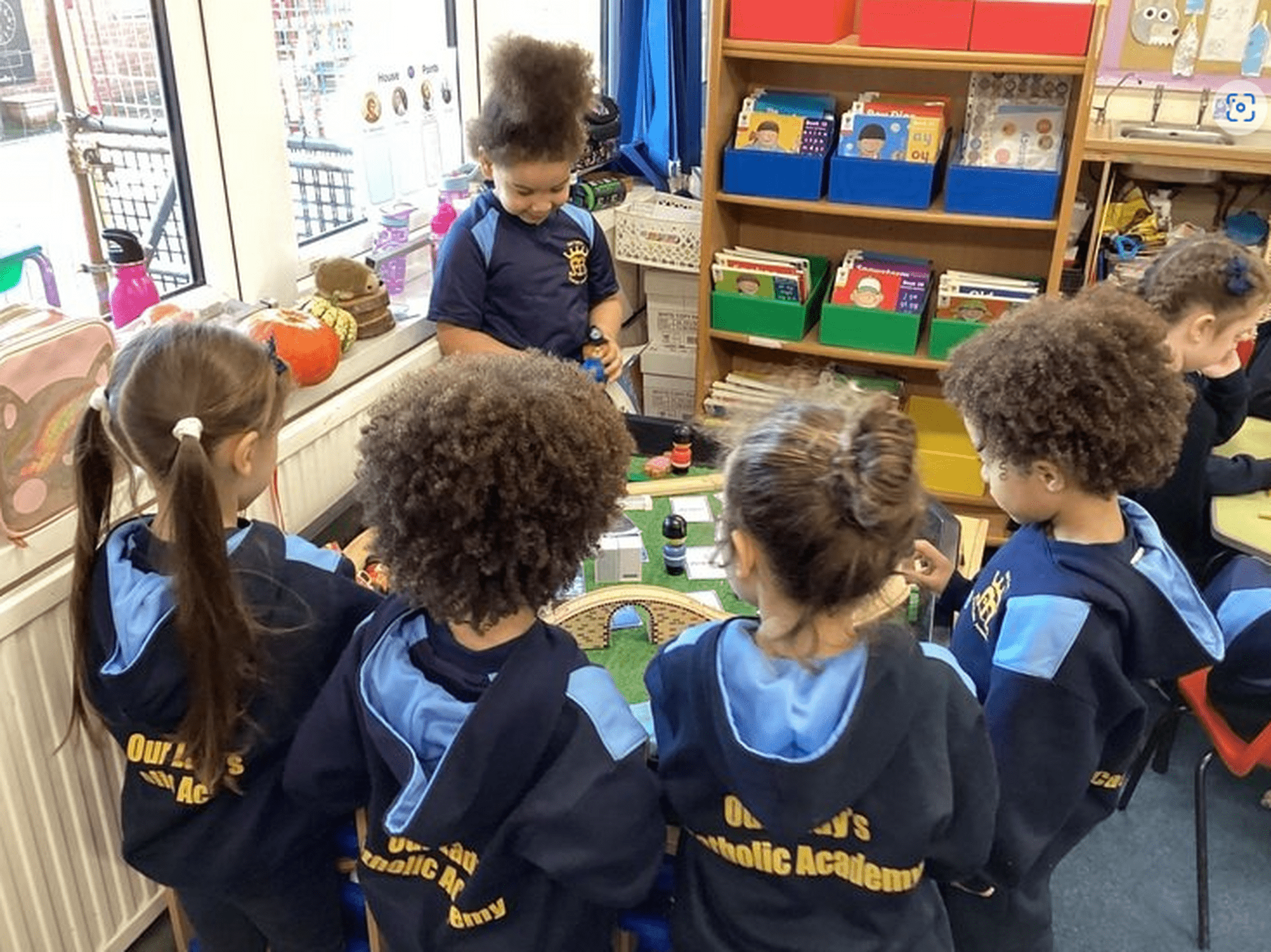


The Year 2 Team
Miss Suleyman and Miss Regan will be in the Year 2 class.
Maths
Across the school, we use the Power maths scheme. Children develop their understanding through practical activities, pictures and written methods, using a range of concrete resources. Alongside their daily Power mlessons, children take part in maths Blast sessions to strengthen key skills, such as number bonds to 10.
Physical Education
The children have P.E every week on Thursday and Friday. They should come to school wearing full P.E kit consisting of trousers/ shorts, T-shirt and trainers which adhere to the school uniform policy. Earrings cannot be worn during the P.E session therefore it is greatly appreciated if parents take earrings out before school, this will also ensure that jewellery is not lost - staff cannot help to remove earrings.
Home Learning
Children are expected to be as independent as possible by taking responsibility for: handing in homework; changing their independent reading book; as well as taking care of their own P.E kit and school uniform. This will help them to develop increased responsibility for their own learning and the choices they make as they move through the school.
Seesaw
All parents are asked to sign up for Seesaw - Seesaw is a simple way for teachers and students to record and share what's happening in the classroom. Seesaw gives students a place to document their learning, be creative and learn how to use technology. Each student gets their own journal and will add things to it, like photos, videos, drawings, or notes.
Homework
Homework will be sent out via Seesaw. Topic homework will be projects to complete over the half term. Please see Seesaw for any notes/extra guidance.
Each week the children will have spellings via Seesaw to practise at home.
Reading
Children should read each night with a parent or older sibling. They will be allowed to change reading books once they have completed the book and are able to read and discuss it confidently. Your child’s progress will be monitored through comments in reading diaries as well as reading done with the children in school. The children will move through the reading bands when they have acquired the skill to read the books fluently and understand the text confidently. Reading diaries should be signed a minimum of three times per week at home.
The children will also access Accelerated Reader(AR) in school weekly. Please see below for a summary of the benefits of AR.
Writing
Children will be developing their writing skills by using adjectives, expanded noun phrases, verbs, and conjunctions to make their sentences more interesting. They learn to structure their writing, use correct punctuation, and spell common words accurately. Children write for different purposes, such as stories, letters, and reports, and practice expressing their ideas clearly and creatively, building confidence and enjoyment in writing.
The 5 steps to reading success
It's all about practise. AR encourages substantial differentiated reading practise to create strong readers. Based on each student's independent reading level, AR helps teachers set personalised goals for each student, and guide students to books that are difficult enough to keep them challenged, but not so difficult as to cause frustration. In addition, AR helps teachers monitor students' vocabulary growth, literacy skills development, and other reading skills.
1.Determine reading level.First, a student’s optimal reading level is determined through the STAR Reading Enterprise assessment. This assessment suggests a range of book levels for each student called the “zone of proximal development”,or ZPD. Children should begin reading books that have a level at the lower end of their ZPD and gradually move up the range in order to make optimum progress.
2. Set practice goals. Teachers support children to set individualised reading practice goals based on reading quantity, quality, and difficulty and they can then monitor progress toward those goals.
3. Personalised practice. Personalised reading practice means students read books of interest at their own reading level. AR Book Finder makes it easy to find the perfect book.
4. Students take an AR Quiz. AR offers more than 150,000 quizzes of three types on both fiction and nonfiction titles. Students have many different options for taking AR Quizzes, including laptops, PCs and tablets as well as through the AR Student App available on Apple® devices.
5. Receive instant feedback. AR provides teachers with immediate information, helping them monitor the comprehension skills of each student and inform further instruction or intervention. Students and parents get instant feedback to help motivate success with the use of Renaissance Home Connect.
chttps://ukhosted11.renlearn.co.uk/2248093/default.aspx
Numbots
Numbots is an online learning platform which is accessed through the Times Tables Rockstars login. The game is aimed at boosting addition and subtraction skills for all aged children. All children start at the same place in Story Mode, and when they get to a certain stage they unlock Challenge Modes.
Times Table Rockstars
Times Tables Rock Stars is a carefully sequenced programme of daily times tables practice with a rock star theme. The children log in with their own username and password (reading diaries) and practise their times tables. Tables are currently set for Year 2 (2's,5's and 10's) and will increase as we learn more. Children are inspired to become ‘rockstars’ through fun daily practice.
A majority of maths topics require multiplication knowledge and without quick recall children can fall behind. This can also affect learners’ confidence in maths or cause them to become anxious about their abilities. Teaching higher level maths can become difficult if students lack fundamental skills, such as times tables recall and so it is a crucial aspect of maths lessons.
https://play.ttrockstars.com/auth/school/student/8048
Purple Mash
Purple Mash is used in ICT lessons and Topic lessons. It's a creative online space with lots of projects to complete.
| Name | |
|---|---|
| 2014-muck_doc_knowledge_organiser_a4.pdf | Download |
| 2014-street_doc_knowledge_organiser_a4.pdf | Download |
| glossary Coastline.pdf | Download |
| glossary Movers and Shakers.pdf | Download |
| Home Learning Activities Plan Autumn 2 Movers and Shakers.docx | Download |
| Home Learning Activities Plan Spring 1 Muck, Mess and Mixtures.docx | Download |
| Home Learning Activities Plan Spring 2 Street Detective.docx | Download |
| home-learning Coastline.pdf | Download |
| home-learning Mover and Shakers.pdf | Download |
| KIRFS overview.pdf | Download |
